
Books by Terra Trevor, and anthologies containing her work
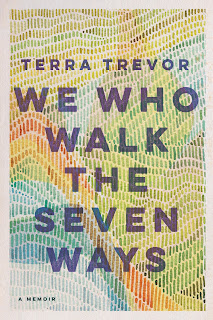
WE WHO WALK THE SEVEN WAYS: A Memoir
University of Nebraska Press
We Who Walk the Seven Ways is Terra Trevor’s memoir about seeking healing and finding belonging. After she endured a difficult loss, a circle of Native women elders embraced and guided Trevor (mixed-blood Cherokee, Lenape, Seneca, and German) through the seven cycles of life in Indigenous ways. Over three decades, these women lifted her from grief, instructed her in living, and showed her how to age from youth into beauty.
With tender honesty, Trevor explores how every ending is always a beginning. Her reflections on the deep power of women’s friendship, losing a child, reconciling complicated roots, and finding richness in every stage of life show that being an American Indian with a complex lineage is not about being part something, but about being part of something.
University of Nebraska Press | Barnes & Noble | Bookshop & IndieBound | Amazon
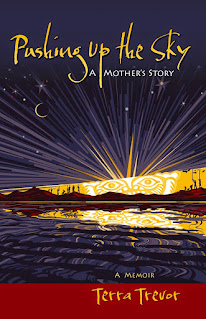
PUSHING UP THE SKY: A Memoir
KAAN: Korean American Adoptee Adoptive Family Network
"Terra Trevor’s Pushing up the Sky is a revelation of the struggles and triumphs packed into the hyphens between Korean and Native American and American. From her, we learn that adoption can best be mutual, that the adoptive parent needs acculturation in the child’s ways. With unflinching honesty and unfailing love, Trevor details the risks and heartaches of taking in, the bittersweetness of letting go, and the everlasting bonds that grow between them all. With ‘Pushing up the Sky’, the ‘literature of adoption’ comes of age as literature, worthy of an honored place in the human story." —Robert Bensen, editor of Children of the Dragonfly: Native American Voices on Child Custody and Education
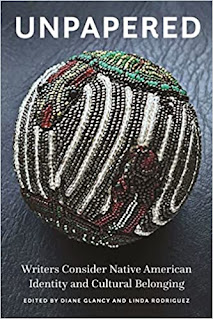
University of Nebraska Press
Unpapered, edited by Diane Glancy and Linda Rodriguez, is a collection of personal narratives by Indigenous writers exploring the meaning and limits of Native American identity beyond its legal margins.
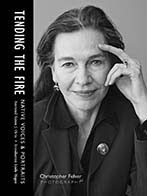
University of New Mexico Press
Tending the Fire by photographer Christopher Felver with an introduction by Linda Hogan and a foreword by Simon J. Ortiz, celebrates the poets and writers who represent the wide range of Native American voices in literature today. In these commanding portraits, Felver’s distinctive visual signature and unobtrusive presence capture each artist’s strength, integrity, and character. Accompanying each portrait is a handwritten poem or prose piece that helps reveal the origin of the poet’s language and legends.

The University of Arizona Press
Children of the Dragonfly, edited by Robert Bensen, is the first anthology to document this struggle for cultural survival on both sides of the U.S.-Canadian border. Invoking the dragonfly spirit of Zuni legend who helps children restore a way of life that has been taken from them, the anthology explores the breadth of the conflict about Native childhood. Included are works of Joy Harjo, Sherman Alexie, Eric Gansworth, Terra Trevor and others. They take readers from the boarding school movement of the 1870s to the Sixties Scoop in Canada and the Indian Child Welfare Act of 1978 in the United States. They also spotlight the tragic consequences of racist practices such as the suppression of Indian identity in government schools and the campaign against Indian childbearing.

Children of the Dragonfly, edited by Robert Bensen, is the first anthology to document this struggle for cultural survival on both sides of the U.S.-Canadian border. Invoking the dragonfly spirit of Zuni legend who helps children restore a way of life that has been taken from them, the anthology explores the breadth of the conflict about Native childhood. Included are works of Joy Harjo, Sherman Alexie, Eric Gansworth, Terra Trevor and others. They take readers from the boarding school movement of the 1870s to the Sixties Scoop in Canada and the Indian Child Welfare Act of 1978 in the United States. They also spotlight the tragic consequences of racist practices such as the suppression of Indian identity in government schools and the campaign against Indian childbearing.

University of Oklahoma Press
Native literature, composed of western literary tradition is packed into the hyphens of the oral tradition. It is termed a “renaissance” but contemporary Native writing is both something old emerging in new forms and something that has never been asleep. The two-hundred-year-old myth of the vanishing American Indian still holds some credence in the American Southeast, the region from which tens of thousands of Indians were relocated after passage of the Indian Removal Act in 1830. Yet, a significant Indian population remained behind after those massive relocations. This is the first anthology to focus on the literary work of Native Americans with ancestry to “people who stayed” in southeastern states after 1830 and represents every state and every genre. Edited By Geary Hobson, Janet McAdams and Kathryn Walkiewicz.
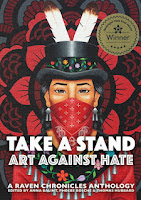
A Raven Chronicles Anthology
Take a Stand: Art Against Hate, contains poems, stories and images from 117 writers, 53 artists, divided into five fluid and intersecting sections: Legacies, We Are Here, Why?, Evidence, and Resistance. We begin with Legacies because the current increased climate of hate in this country didn’t begin with the 2016 election, and to find its roots we must look to U.S. history.

Fulcrum Publishing
Writers from around the world were asked to consider the devastating nature of conflict-inner wars, outer wars, public battles, and personal losses. Their answers, in the form of poignant poetry and essays, examine war in all its permutations, from Ireland to Iraq and everywhere in between, this moving anthology encompasses a wide range of voices. Edited by MariJo Moore.

Johns Hopkins University Press

INDIGENOUS THOUGHTS CONCERNING THE UNIVERSE
Renegade Planets Publishing
"All the tribes say the universe is just the product of mind... It fits perfectly with the quantum. Indians believe the universe is mind, but they explore the spiritual end of it, not the physical end." —Vine DeLoria Jr.

Gunpowder Press
Women in a Golden State includes poems and micro-essays from across California, ranging from awarded Poets Laureate to writers who are finding new forms of expression. The collection examines the mythology and reality of being a woman of a certain age, especially in youth-obsessed California, inviting its readers to reconsider aging not as an end, but as an ongoing journey—one filled with beauty, strength, and boundless possibilities.

WRITERS ON MULTIRACIAL IDENTITY & BOTH/AND BELONGING
Beacon Press-Penguin Random House
Edited by Anne Liu Kellor
Mixed people carry lifelong embodied knowledge about existing in non-binary, intersectional worlds. Mixed Roots complicates the narrative around race and identity—dispelling narrow ideas that there is ever one “right” or singular way for folks to identify.
Born out of a community of writers formed through editor Anne Liu Kellor’s annual writing workshop, Mixed Roots collects 29 essays (plus additional resources) infused with a deep examination of privilege, microaggressions, whiteness, ancestral trauma, internalized racism, history, and paradoxical truths—going beyond common tropes found in many mixed-race narratives.
We all carry in our bodies the historical legacies, confusion, trauma, and harm caused by racialized experiences—Mixed Roots says we are multilayered, not easily defined or contained by one story, and as such, can speak to us all.
You Who Are In My Stories

Photo Credit: Paul Wellman
You who are in my stories, you made your transition and have walked on. As you know, my stories are not only about me, they are also about you, and our friends whose lives are braided with mine, defining it, and shaping me.
In my stories I've offered a measure of privacy with some name changes. But what has not changed is the love and time you gave. I’m holding the love and the gift of your time, helping me give to others.
This morning the ocean is reflecting the sunlight and is shining like thousands of diamonds. My grandson and I walked for 2 miles along the sand, exploring, looking for seashells rounded smooth by the waves. It was a good day for collecting driftwood too. In my mind I brought you along with us on our walk. The bits and pieces of shells we picked up would delight you, perfect for art projects. You will also be happy to know I’m wearing the beaded medicine pouch you made for me twenty-five years ago. So please know I am protected. If I forget to put it on in the morning I hear your voice, reminding me. Your beadwork lets me feel close to you, and reminds me of all our years and great times together, the lessons you gave, and the way you believed I could, and taught me how.
Sage down, and prayer up. The sunrise singers have come for you. A high sweet trill of voices, abalone beads swaying, carrying songs from the ancestors. I'm pretty sure the sunrise ceremony now rides in my heart, and is carrying me.
I love you my friend, auntie and sister.
Gratitude, Respect, Caring, Compassion, Honesty, Generosity, Wisdom.
Donadagohvi. Until we meet again.
We Who Walk the Seven Ways (University of Nebraska Press)

We Who Walk the Seven Ways is Terra Trevor’s memoir about seeking healing and finding belonging. After she endured a difficult loss, a circle of Native women elders embraced and guided Trevor (mixed-blood Cherokee, Lenape, Seneca, and German) through the seven cycles of life in Indigenous ways. Over three decades, these women lifted her from grief, instructed her in living, and showed her how to age from youth into beauty.
With tender honesty, Trevor explores how every ending is always a beginning. Her reflections on the deep power of women’s friendship, losing a child, reconciling complicated roots, and finding richness in every stage of life show that being an American Indian with a complex lineage is not about being part something, but about being part of something.
Nominated for the 2023 Electa Quinney Award for Published Stories administered by the Association for the Study of American Indian Literatures (ASAIL).
University of Nebraska Press | Barns & Noble | Bookshop & IndieBound | Amazon
A Winter Solstice Love Story

For forty-three years I lived on the Central California Coast in an area that makes up the traditional Chumash homeland. In those beautiful days our solstice celebrations were rooted in the traditional ways of the Chumash.
Four years ago, I moved away, away from the land and people who raised and shaped me. Now I’m living near my grandchildren on the Northern California Coast. Everything is still new for me, unfamiliar. I’m walking gently while this Indigenous California landscape in Ohlone territory teaches me who I am.
For the record, I’m not Chumash. I’m mixed-blood Cherokee, Lenape, Seneca and German descent, with ties to Korean. And I hold the culture, traditions, and history of the Chumash people in my heart. This is their heritage, their life blood, and their landscape of time. And for all Native people Solstice is a time to honor the connection to our ancestors, to the rhythm of nature and our continuing deepening ties.
In my bones I remember, and I can still hear and feel the slap of the wansaks’—a musical instrument made from the branch of an elderberry—beat out a steady rhythm and a mix of laughing voices of my friends gathered contrast with the drift of fog and the heavy surf pounding. Lanterns are lit against the darkening evening and a fire is built, where storytelling takes place. Salmon is on the grill, potatoes are roasting, and the picnic table is loaded with more food. We are honoring solstice, an astronomical phenomenon marking the shortest day and the longest night of the year. For people throughout the ages—from the ancient Egyptians and Celts to the Hopi—midwinter has been a time of ritual, reflection, and renewal.
Solstices happen twice a year, around June 21 and again around December 21. The date is not fixed, it varies; the December Solstice can take place on December 20, 21, 22, 23. While we usually think of the whole day as the Solstice, it actually takes place at a specific moment when the Sun is precisely overhead the Tropic of Capricorn. Solstice helps us cultivate a deeper connection to nature and to all of the things that matter most to us. It’s a time for feeding the spirit and nurturing the soul. Prayers and rituals set forth a plan of life for the coming year, ceremonially turning back the sun toward its summer path.
Throughout history, honoring the solstice has been a way to renew our connection with each other and with acts of goodwill, special rituals, and heightened awareness. Solstice is also reserved for feeding the spirit and nurturing the soul. It’s a period for quiet reflection, turning inward, slowing down and appreciating the day, the hour, and each moment.
While we don’t know how long people have been celebrating the solstice, we do know that ancient cultures built stone structures designed to align with the sun at specific times, and in ancient times the winter solstice was immensely important because the people were economically dependent on monitoring the progress of the seasons. There was an emphasis on the fall harvest and storing food for winter.
Remembrance weighs heavy on my mind. Tonight as we near Winter Solstice, with a December moon above me, and the only light I can see, I’m falling back in time. My memories are washing over me like a series of massive waves hitting hard, without warning. As soon as I catch my breath another beautiful memory pulls me back home. My mind floats back over the years. Memories surface—and feelings that remain untouched in my heart, in that place of perpetual remembering. All those Winter Solstice nights of long ago, when we were young, and our elders walked this good earth with us, when we gathered for a good meal together, with storytelling, laughter, conversation, dance, and songs from the ancestors. Fire offerings of chia seeds, acorn flour, and berries were made, followed by prayer and ceremony.
Now, I’m in my seventies, nearly the same age as the elder Native women who guided me, informed, instructed and shaped me into the woman I am today. I’m honoring my Indigenous community with gratitude for their love and the gift of their time they gave me, helping me give to others.
With the night sky, dark and beautiful above, I walk toward the sea and stand silent in respect to the ancient peoples who left the witness of their lives, visions, and the strength of their faith for me to ponder. The scent of sage hangs in the air. I fill my lungs with it, knowing it will permeate my body and cling to my soul as a reminder of what I can feel and remember when we were together long ago.
Copyright © 2025 Terra Trevor. All rights reserved.
Dancing to Remember: Native California

I am gathered with friends and family under a bead blue California sky. Powwow weekend. Santa Ynez Chumash Inter-Tribal. My shawl is folded over my arm. I listen to the wind, spilling through the tree leaves.
Time merges with timelessness. Memories circle and carry me to a day forty years ago, when I stood on this good land, near the oak tree for the first time, with my young children gathered about. The same tree I am standing under today.
I lean my back against this oak. This tree, giver of life. She has raised a community with song, dance and prayer. We return to this land, to this tree, in October every year. Laughter, flirting and romance in lives young and old take place all around her.
She stands sentry. Her autumn softened leaves, swept up from a cool mountain breeze, fall gently on American Indian fathers holding sleeping babies. Mothers trading stories, their shiny cut beads reflecting light while braiding their children’s hair, with feathers in the colors of the earth, trailing.
There were difficult times too for this oak tree, when she witnessed wild fires raging, drought years with dust rising against the clear sky. The times when her branches sheltered human arguments and angry outbursts, but mostly she is surrounded by love and caring.
I stand high upon a flat rock, my eyes roaming, taking in the day, the years. Filling my lungs with sweet fragrances of the damp Mother Earth. Feeling my body grow light, like the feathers of the red tail hawk touching the soft clouds.
For the record I am not California Indian. I'm mixed-blood Cherokee, Lenape, Seneca, and for forty-three years I lived in an area that makes up the traditional Chumash homeland. I spent those years walking gently, a guest on this good land and I hold the culture, traditions and history of the Chumash people in my heart. For my Chumash friends this is their landscape of time.
I remember the words of my aunties and my grandmothers, about how each person is a connection to history and when we gather around the area and form a circle around the drums, singers and dancers we are all connected, and it's our way of saying that American Indian people are still here. This is our celebration of life past, present and future.
First published in News from Native California, a quarterly magazine devoted to California's Indian peoples published by Heyday Books.
Copyright © Terra Trevor. All rights reserved. Photo courtesy of the author.
Tomol Evening: California's Indigenous Peoples

I came to spend four days and nights on the island, to let come what may. I wanted to be helpful to my friend, eighty now and a deeply loved and respected, elder. She was teaching Native children and adults basket weaving, beadwork and storytelling. She was still hearty but needed help fetching things and getting from here to there. I was learning as she taught me how to be helpful and grow old in a beautify way.
Used to be, when you walked on the island of Santa Cruz and looked around, all the land you could see was Chumash Indian land. The island was once home to the largest population of island Chumash with a highly developed complex society and life ways. Marine harvest and trade with the mainland. Island Chumash produced shells beads used as currency. Grasses and roots for making baskets and other necessities for living were there for the taking.
And so, apparently was the land. Historical records show that by 1853 a large herd of sheep was brought to the island. The Civil War significantly increased the demand for wool and by 1864 some 24,000 sheep over grazed the hills and valleys of Santa Cruz Island. Some of the early buildings from sheep ranching still stand.
Now, instead of sheep for the next four days the island would again be filled with Indians. We had come to honor the Chumash peoples' annual channel crossing from the mainland to the Channel Islands.
A camp village was put up, where basket making, cordage making, song, prayer and storytelling take place. The first day there are about fifty Indians gathered. By Saturday, the day the tomol arrives, there would be nearly two hundred of us, and the adage “a single bracelet does not jangle alone” describes us. The connectedness we have to each other is so much a part of our lives, it can’t be distinguished from our lives.
Although I am not Chumash, I’m of mixed-blood Cherokee, Lenape, Seneca, German descent, for forty-three years I lived in an area that made up the traditional Chumash homeland. I hold the culture, traditions and history of the Chumash people in my heart. For my Chumash friends this is their heritage, their landscape of time.
There’s real power here. When we leave the campsite village and walk to the rim of the island first there is silence. Raven and Sea Gulls at the water’s edge dip and wheel and dive. Under a sky turned pink we go for a sunset swim. With much island and ocean and so few people there is the lazy wag of space. I float in the sea with my head surrounded by gulls and fledglings.
The next morning at dawn, we woke to sunrise singers. A high sweet trill of voices, abalone beads swaying, carrying songs from the ancestors. The singers were letting us know it was time to gather for sunrise ceremony.
Later in the day we waited for the paddlers to arrive. I stood with others on the shore and felt the sun rise from my heart. I’d known two of the paddlers, a male and a female crewmember, since they were babies, and I’d watched them grow to strong, beautiful, kind and responsible, young adults. Now I was a grandmother, moving toward elderhood and I knew the world that I would one day leave behind is in good hands.
For a moment I was returned to 1994 when these two young paddlers where small kids and our community began American Indian Education Project began the series “Tomol Trek” with the goal of building a modern-day recreation of a tomol. Our tomol was built by the children under the guidance of a master, in his backyard tomol building workshop. There was a perfect balance between master and apprentice as the children sanded pieces of the vessel throughout construction.
A dozen hands moved slowly across the handle, moving towards the paddle end of an oar. Small hands, young hands, skin so smooth and maroon, peach-colored hands, muted brown, every child with a tribal memory circling their heart.
Back in those days, my son and daughter were two of the kids helping out. They knew about the pleasure found in working hard and seeing the good results of that work. As they sanded the pieces of wood, I watched my kids find their relationship with the tomol they had helped build. Our kids did not have to exchange their Native values for education; the tomol carried ancient memory and cultural knowledge into their present lives.
Now two of those children where attended the academy were grown ups, and they were making the crossing in the tomol. The paddlers left the mainland at three a.m. There would be a careful change of crew three times. The moment the paddlers in the Tomol come into view my heart broke open and I was ageless and timeless and felt the welcome arms of the ancestors.
The tomol is brought forth from the sea and there was song and prayer.
Back at camp we prepared dinner, while island fox kept a steady eye trained on us. A near Harvest moon rose We ate, talked, joked, and told stories of past crossings to the island, and “the old ways” moving through our evening together like dancers, stirring to the same rhythm. All of the people, the paddlers and those that helped make the crossing and camp village possible—those who brought and cooked food, the fire keepers, the elders who led prayer and ceremonies, the singers, the dancers, and the paddlers—were honored.
Time was a continuous loop until our stay on the island came to a full circle closure. Thankful for what I had been given, yet reluctant to let go, I prepared to leave and made the rounds to say goodbye to everybody who had welcomed me.
On the boat ride to the mainland, we were soaking wet, laughing. A Humpback whale was sighted in the ocean. In the Chumash language my friends sang in the whale, and she surfaced.
At home in earthen shadows, rinsing off the salt water and sand, I felt the light from the moon, full and wan. I braided a pungent memory and filled my lungs and my heart with it, knowing it would permeate my body and cling to my soul as a reminder of what I could feel when we were all together on the Island.
Tomol Evening was first appeared in News from Native California, a quarterly magazine devoted to California's Indian peoples published by Heyday Books.
This essay is included in We Who Walk the Seven Ways: A Memoir by Terra Trevor (University of Nebraska Press).
Photo credit: Terra Trevor
Copyright © Terra Trevor. All rights reserved.
Tomol Trek: California's Indigenous Peoples

After much hard work, the project put together an academy with federal (Title V) funding. Each year the academy had a different focus. In 1997 the year’s final outcome was aimed at producing a modern-day recreation of a traditional Chumash tomol. The children and teenagers attending ranged from elementary through high school. Many were Chumash, but the kids represented a variety of tribes, all with a common bond: every one of these kid’s lives in an area that made up the traditional Chumash homeland. We all hold the culture, traditions, and history of the Chumash people in our hands and in our hearts.
The tomol, a type of plank canoe, is unique to the Chumash. Tomols were used for trips between the islands and Chumash settlements. Originally they were about thirty feet long, and could hold four thousand pounds. Usually they carried six people but could hold up to twelve.
Our modern-day tomol was built by the children under the guidance of Peter Howorth, in his backyard tomol building workshop. There is a perfect balance between master and apprentice as the children sand pieces of the vessel throughout construction. A dozen hands move slowly across the handle, moving towards the paddle end of an oar. Small hands, young hands, skin so smooth and maroon, peach-colored hands, muted brown, every child with a tribal memory circling her or his heart.
A kind of palpable energy surrounds the tomol project. People seem to want to be a part of what’s going on. American Indian students from Cal Poly and UCLA arrive to volunteer support. Before I know it, I’m one of those helping out. The more I sand, the closer I am to the tomol. Sometimes I stop in the middle of the day and am silent in respect to the ancient peoples who left the witness of their lives, their visions, the strength of their faith for us to ponder.
My son is one of those kids helping out. He knows about the pleasure found in working hard, and seeing the good results of that work. As he sands the pieces of wood I watch him find his relationship with the plank canoe he is helping to create.
Our real goal is not only the finished tomol; it is also the season long process of working together. Still, everyone eagerly waits the day the vessel will be launched. When the maiden voyage takes place, within the harbor, there is only a small gathering of people. Before the “official” crewmembers begin their training we get to know the tomol. Her name is Alolkoy—dolphin in Chumash. She is twenty-five feet long, and made of redwood. Conditions in the harbor are ideal. The sun is warm; a soft, steady sea breeze blows at our backs. We fill sandbags for ballast, and then one at a time, we each have a turn sitting inside the tomol.
 |
My son finding his relationship with the Tomol he helped build. |
Remembrance weighs heavy on my mind, as it does for most Native people seeking to affirm cultural identity in a high-tech world. There is a comfort in being with those who understand. Our kids do not have to trade in their Indian values for education; the project carried ancient memory and cultural knowledge into their lives today.
First Published in the winter 1997 issue of News from Native California, a quarterly magazine devoted to California's Indian peoples.
Postscript
A number of the children who participated in the Tomol backyard building workshop have grown up to become crewmembers making the crossings from the mainland to Limuw - Santa Cruz Island.
Photo credit: Terra Trevor
Copyright © Terra Trevor. All rights reserved.
Race, Ethnicity and My Face

I have light skin, light enough that some people think I’m white. My dad, a Native man, and my mother, a white woman, had me when they were teenagers in 1953.
I grew up in Compton, California. The family next door was Bolivian and they loved me like a daughter. My best friend was Japanese and Mexican. Still, when I was 10 years-old, my dad sat me down to have “the talk” with me about race. He told me about how to navigate the streets, about how to stay safe. He also wanted to make sure I understood that in order to be accepted by certain white people it mattered who your friends were.
By that point, however, I already knew.
I had discovered that when I went to the houses of my white friends after school I needed to be aware of how I was holding myself at all times. I learned to stay alert and watch for clues: sometimes there might be an older brother who pulled his eyes in an upward slant and said something mean about Chinese people; or a father that casually spouted racial slurs at people of color, and made fun of Indians. When this happened, I knew I had to make an excuse to go home and I’d never go back. Sometimes I’d make up stories about my family in order to protect them. But if the mothers of my white friends didn’t feel satisfied with my answers, I wouldn’t be allowed to stay at their houses for long.
Things would be different when I went over to the houses of my friends of color. Their mothers would always take me in without hesitation. And if there was a grandmother at home who spoke English with an accent, or didn’t speak English at all I could usually be certain they wouldn’t ask me if my daddy had a job. In their homes, I felt safe.
As a child I had things all figured out. But when I reached my late teens and early twenties it became more complicated.
Hanging out with my friends of color meant witnessing them get treated poorly and face multiple instances of discrimination by white people. Being out with my white friends, however, meant that we could expect to be given preferential treatment no matter where we went. When I began dating and went out with Native boys or other boys of color in my community, I was considered “white trash” by many white Americans. I could even expect to have a white man point to my date and ask me what I thought I was doing being with the likes of someone like him. But when I dated the first guy that was white, I was allowed to be white by association and had access to the privileges of white America because of that. In stores or restaurants, we were always served or seated first, before people of color.
When we acted up or got into mischief in public, it was laughed off as opposed to being taken seriously with the assumption that we were up to no good like it is for teens of color.
My early adulthood was charged with decisions to make: Should I mention my Native identity? Should I let white people I don’t know well and may not ever want to become close friends with, assume I’m white? Keep my racial identity private from employers and others who would discriminate against me if they knew I’m a mixed-blood, with dark skinned family members and dark skinned friends, with strong ties to Native America and firmly rooted within a community of color.
At age twenty-three, I found myself employed full-time in a company that was predominantly white. So white, that my intuition told me if my boss had known I was anything other than white, I would have probably not been hired. My white co-workers seemed to only accept people of color who adhered to white social norms and didn’t challenge their biases. They could not accept how vastly different the culture values, thought processes, and social norms of ethnic people were from white America.
I wear the face of a woman with light skin privilege. While keenly aware of the advantage it has given me over my friends and family who are not able to pass, I always make the decision to disclose my mixed-blood identity. I never try to pass. Passing would mean turning my back on my Native family, my family and friends of color, and my community and my identity.
Following my experiences working in a predominantly-white company at 23, I began to make sure that at each interview I had for a new job, I’d take a “racial temperature check” to ensure that people of color who looked like my friends and family were always welcomed. And I’d proudly list all the positions I’ve held within American Indian and Asian-American organizations on my resume.
Later on in my life, I married a man who was white and we had a daughter together, before adopting two Korean children. Two of our kids had apparent ethnic features and their black hair and darker skin often caused people to mistakenly assume they were Native American. I knew that blending into white society would never be an option for them. So it was always a toss on whether they would be able to ride on the wings of my white privilege, or be subject to the racism that ruled America when they were out on their own.
In turn, I did my best to connect them with their Korean roots by becoming deeply involved with the Korean community in our town. For more than four decades my heart and my soul was shaped by my connection to the Korean community for which I am grateful to be a part of.
When people who do not know me look at my face, what they cannot see is that I have soul-deep ties to Korean ethnicity, and that my mother, who is white, grew up in a mixed-race family, and that I have cousins who are white mixed with Black and Mexican and Asian.
Now, in my 70s, my gray hair and wrinkled face reveal the many years I have lived. Yet what has not changed is what most cannot see: I am a border woman. Borders are set up to define or to separate, but I am neither part white, nor part Native. My blood is a mix between two worlds, Native and white merging together to form a third: a mixed-blood dwelling between the boundaries.
First published in Santa Clara Review, vol 108 / issue 01.
Copyright © Terra Trevor. All rights reserved.
Memoir, Migration and This Wilderness in My Blood

My bags were packed and the boxes stacked. We were moving from the city where we lived for forty-three years. We didn’t have a new house to move into, not yet. While we searched for another home we would live in a 26-foot travel trailer on loan to us and parked on land a family member owns in the redwoods in Northern California.
The morning our belongings were loaded into the truck, I walked through the empty house thanking the space, saying goodbye to the home that sheltered my family for three decades. And before I got into my car to make the long drive, I checked my email. The editor at the University of Nebraska Press, sent an email saying she liked the manuscript for my new memoir, We Who Walk the Seven Ways. They were interested in publishing, and asked for revisions.
Oh, for joy. Happiness. And crazy-making. Take on the task of revising my book manuscript when I was in the process of uprooting my life?
Time driving alone in the car settled my thoughts.
When I arrived at sunset I was filled with calm, strength, trust.
The trailer was parked by the barn, in a meadow with other homes nearby. Still, it was more off grid than I expected.
Multiple times each day I walked uphill to the houses where our families live, downhill to the car, up again with groceries, to do laundry, to take a shower. We didn’t have trailer hookups and needed to be mindful of gray and black water waste. But we had electricity, internet, and plenty of cold well water running from the tap. I gained respect for my privileges and felt positive I would become a better person, and I have.
Every day and most nights are bookended with writing. Writing backed against hiking hills with my grandkids and the dogs, or house hunting. I reached wide to be tender, loving, with my husband, and my family. When I write, I go deep. It’s not easy to move between my mind-world and the outer world.
After a day of writing my daughter’s kitchen is the place to be. Not all of our meals are complicated. Yet the days when we cook from scratch, gives us time to focus on gratitude. The dogs are at our feet, watchful, my grandkids help chop, mix, stir, then dash off, lost in play, then return to the kitchen. We clear the day’s clutter off the table, sit down and savor every bite.
Some people sit and meditate in silence. Others climb Kilimanjaro. Along with my 2-mile morning walk in the redwoods, I hiked to and from the trailer often. When we first arrived, the ground was muddy with rain water. Soon yellow, white and purple flowers dotted the earth and my footsteps formed a path. The flower season was short, the weather warmed. Green foxtails appeared, and quickly dried, sticking in my socks. At first, I grumbled about daily supply hikes in the rain or heat, my arms loaded, and then it became my mediation. I enjoyed the journey, paying attention to the earth, sky. Walking mindfully, stepping carefully.
I am thankful for love and shelter, but we are too crowded in the trailer. We brought too much stuff and it's packed into a too small space. I'd planned to bring only what we needed into the trailer. But instead we included all of the things we "might need" but never did need. My friend Stacy referred to this as a “soul polishing” experience. On my low days I cling to her beautiful words. Stripping off the old expectations, shedding, growing, reaching. I look up and see the trees, the beautiful trees all around me.
Eventually we found a tiny place near the ocean, and for the last few days we lived in the trailer, I worked on my memoir.
On my last day writing in the trailer, I opened the window wide. The wind played in the trees and the air was heavy with the scent of mountains and earth. I had the window open to keep me company. I was lonely.
I love being with the people I love, and I am also happy alone, and I am never lonely. Yet for the past week I felt like poor me, I must sit down all alone and write.
Then I started thinking about how the characters in my favorite books are my friends. Relationships I remember long after I finish reading the book. My most loved books leave me feeling the author invited me over for a long chat at her kitchen table. I favor memoirs so intimate I feel myself leaning over the shoulder of the writer, feeling her thoughts and sneaking into her life.
Thinking about the characters in my favorite books opened the window wider for me, and I found the root cause of my loneliness. With revisions nearly completed, already I missed the characters in my memoir.
While writing I had intimate chats, wandering back over time with Marie, Ann, Mary Lou and Irene. Dancing with Irene long after the moon was full, wearing moccasins beaded in colors of sunrise, clouds and blue skies, her buckskin dress swaying. Irene danced the powwow competitions, Women’s Buckskin style, Northern, in the Golden Age category. At seventy-five with her tight jeans, blue-black hair and flirty personality, Irene reminded me so much of my aunt Jo, I had to keep reminding myself that she wasn’t my aunt Josephine.
I missed the flow of these women, the ones with the grandmother faces, walking the seven ways. How they made me laugh, and told me the truth even when it was hard for me to listen. While writing, I brought them all back, made them come alive again. The women who over three decades, lifted me from grief, instructed me in living, and showed me how to age from youth into beauty.
First published in Women Writers, Women's Books
Copyright © Terra Trevor. All rights reserved.
River, Blood, And Corn Literary Journal: A Community of Voices

In 2010 I established River, Blood, And Corn Literary Journal: A Community of Voices and began collaborating with Native writers, storytellers and artists, promoting community and strengthening cultures with storytelling, poetry and prose.
Our starting point, and our goal, is to honor and continue the work of Lee Francis III, and Geary Hobson, founders of Wordcraft Circle of Native Writers and Storytellers, working to ensure the voices of Native writers and storytellers past, present and future, are heard throughout the world. A variety of writers, backgrounds, communities and viewpoints are presented. Included in our themes are the Elders whose lives inform, instruct, shape and change ours.
While our primary focus is Native and Indigenous writers, we have woven writers and artists from a variety of ethnicities and communities into our pages. Perhaps people of many ethnicities, including recent immigrants from throughout the Americas as well as other parts of the world will find something in this collection that will speak to them with respect to issues of race, identity, culture, community, and representation.
We invite you to follow along with us.
Terra Trevor, Founding Editor
An Afternoon with Wilma Mankiller
This morning my thoughts center on a day back in 2006, when I was among those who gathered with Wilma Mankiller, former principal chief of the Cherokee Nation. We had lunch together followed by an afternoon of conversation, outside on the grass, with the trees and birds, gathered with Native people from my community, and I was comforted with our common Indigenous bond, our shared essence.
I've been thinking about how lucky I am. When I least expect it I've had teachers, always showing up at the right time, exactly when I need them. For every success we have I believe it's important to remember how we got there. I wouldn’t have been able to accomplish all that I have without the steadfast guidance from good people who gave their time to me, mentoring, shepherding and guiding me along, and I am deeply thankful.

From: all-employees-bounces@lists.cherokee.org
[mailto:all-employees-bounces@lists.cherokee.org] On Behalf Of Chad Smith
Sent: Tuesday, April 06, 2010 11:13 AM
To: All Employees (mailing list)
Subject: Wilma Mankiller
Dear Friends,
Our personal and national hearts are heavy with sorrow and sadness with the passing this morning of Wilma Mankiller, our former Principal Chief. We feel overwhelmed and lost when we realize she has left us but we should reflect on what legacy she leaves us. We are better people and a stronger tribal nation because her example of Cherokee leadership, statesmanship, humility, grace, determination and decisiveness. When we become disheartened, we will be inspired by remembering how Wilma proceeded undaunted through so many trials and tribulations. Years ago, she and her husband Charlie Soap showed the world what Cherokee people can do when given the chance, when they organized the self-help water line in the Bell community She said Cherokees in that community learned that it was their choice, their lives, their community and their future. Her gift to us is the lesson that our lives and future are for us to decide. We can carry on that Cherokee legacy by teaching our children that lesson.
Wilma asked that any gifts in her honor be made as donations to One Fire Development Corporation, a non-profit dedicated to advancing Native American communities though economic development, and to valuing the wisdom that exists within each of the diverse tribal communities around the world. Tax deductible donations can be made at www.wilmamankiller.com as well as www.onefiredevelopment.org.
Sent: Tuesday, April 06, 2010 11:13 AM
To: All Employees (mailing list)
Subject: Wilma Mankiller
Dear Friends,
Our personal and national hearts are heavy with sorrow and sadness with the passing this morning of Wilma Mankiller, our former Principal Chief. We feel overwhelmed and lost when we realize she has left us but we should reflect on what legacy she leaves us. We are better people and a stronger tribal nation because her example of Cherokee leadership, statesmanship, humility, grace, determination and decisiveness. When we become disheartened, we will be inspired by remembering how Wilma proceeded undaunted through so many trials and tribulations. Years ago, she and her husband Charlie Soap showed the world what Cherokee people can do when given the chance, when they organized the self-help water line in the Bell community She said Cherokees in that community learned that it was their choice, their lives, their community and their future. Her gift to us is the lesson that our lives and future are for us to decide. We can carry on that Cherokee legacy by teaching our children that lesson.
Wilma asked that any gifts in her honor be made as donations to One Fire Development Corporation, a non-profit dedicated to advancing Native American communities though economic development, and to valuing the wisdom that exists within each of the diverse tribal communities around the world. Tax deductible donations can be made at www.wilmamankiller.com as well as www.onefiredevelopment.org.
Autumn in Dixon, New Mexico


The land and the places where I have lived shape me. The land serves as elder, and friend. I walk in its grace, feel its solace and hear the stories it tells me. For many years my long-loved friend lived in Dixon, New Mexico. His door was always open for me.

My friend has finished his walk on earth and has crossed over to the other side. From flesh and blood to souls and songs.
I feel the wind spilling through the red and yellow leaves, and the fine dust from this red earth on my skin, as I walk the good land of the home I carry within.
Photo Credit: Randy, Santa Fe Daily Photos.
The Cherokee Word for Water
I grew up within in a large extended Cherokee, Lenape, Seneca family, with lots of cousins, grandparents and great-grandparents, with roots in Oklahoma. Great-grandma could fix a meal to feed fifteen of us and I loved to sit beside her coal black stove, listening to her stories. I’m the granddaughter of sharecroppers, and I was born to a teenage mother and father in 1953. When I was young, we were poor—but we had water.
Having water meant we always had plenty to eat. We had fresh running water to rinse, soak and simmer pots of pinto beans and black-eyed peas. In the summer when rainfall was not plentiful, since the water table was usually high, we could turn the hose on to soak the apple and peach tree and their fruit fed us in return.
There was water for pie baking, and when the sun seared overhead water to mix with Kool-Aid to freeze into popsicles. Home canned goods must be put up in hot, sterilized jars and we had water for boiling before we used them. We had water to wash our hands before pressing a tortilla on a hot skillet, and it was clean and safe to drink.
When no one else believed in them, they believed in each other.
Set in the early 1980s, the story of The Cherokee Word for Water begins in a small town in rural Oklahoma where many houses lack running water. The film tells the story of a tribal community joining together to build a waterline by using traditional Native values of reciprocity and interdependence and is told from the perspective of Wilma Mankiller and Charlie Soap, who join forces to battle opposition and build a 16-mile waterline system using a community of volunteers. In the process, they inspire the townspeople to trust each other, to trust their way of thinking, and to spark a reawakening of the universal indigenous values of reciprocity and interconnectedness. This project also inspired a self-help movement in Indian Country that continues to this day.
“The Cherokee Word for Water” is dedicated to Wilma Mankiller’s vision, compassion and incredible grace, and tells the story of the work that led her to become the Chief of the Cherokee Nation. The film was funded through the Wilma Mankiller Foundation to continue her legacy of social justice and community development in Indian Country.
An All-American Korean American 4th of July

After
another helping of dry cuttle fish, after we eat as much food as we can hold,
we find a grassy spot under a shade tree, pull out a folk guitar, stretch back
on the grass, and sing. The familiar melody has me humming along, while the
group sings the lyrics in Korean. Most of the time I forget that my husband,
our youngest daughter and I are the only ones who are not Korean. At these
gatherings all my friends are Korean American, like two of my children. The
afternoon leaves me with a contented feeling, a sense of belonging, like I have
when I go to a family reunion.
However,
my friends within the Korean community didn’t feel like family in the
beginning, way back in 1987, when my
kids were then four, six and ten. I needed to reach deep with faith, because in
giving my kids the opportunity to grow up within an all-Asian group I also had
to let go of them a little bit in order to allow them to find their place
within the Korean community and to learn to identify and express themselves as
Korean adoptees, instead of trying to fit into the stereotypical Korean model
everyone expected them to be.
I’ve
heard adoptive parents say they want the Korean American community to accept
their family on the adoptive parents terms and not to absorb their kids. They
don’t want them to take over. But I’ve never felt this way. I wanted my
children to have the same opportunity to be immersed in the Korean community
and discover their identity, as I did growing up mixed-blood Native American
within Indian country. The difference is Korean culture was initially
unfamiliar to me. We were making new friends and I was allowing them to take my
children into a world unknown to me.
I
remember my grandmother’s words. “Child,” she said, “We’re Indians, and our culture has been scattered into odds and bits,
yet Indian people are determined to keep our life ways alive.”
I
wanted to give my kids what was given to me, to make it possible for them to
gather bits and pieces of Korean culture and braid it into our lives, and show
them how to hold their heritage high. While my son and my oldest daughter
explored the constantly evolving questions of what it means to be Korean
American, and my younger daughter who is Cherokee, Seneca and Irish,
grew increasingly more diverse, my husband and I sank in roots and worked to
build lasting relationships and to let our new friends know that our interest
in doing so was heartfelt.
For three decades our Korean community gatherings provided me with some of
the deepest sharing I’ve ever known. At the picnic we rest just long enough
for our food to settle, and then it is time to play games. There are sack
races, three-legged races, a water balloon toss, followed by a scavenger hunt.
Everyone plays, the grandmas and grandpas, even babies are encouraged to join
in, and there is always someone willing to lend a helping hand.
I
find it wildly wonderful that fancy equipment is not needed for our game
playing. We have a ball, a blindfold, two gunnysacks and we have each other.
Just people enjoying one another, a day of slowing down and relaxing at the
park, it’s not always an easy thing to find.
First
published in Adoption Today. Reprinted in The Huffington Post.
Copyright © Terra Trevor. All rights reserved. Photo courtesy of the author.
Journal Writing and Talking Circles With Kids and Teens
I never say we’re going to learn our culture, but the kids learn it because they’re living it. In our journal writing circles I don’t necessarily say, we’re going to explore our identity, yet most of the time this is what we do.
Our classes are held outdoors under a bead-blue sky. We stretch out on the grass, a breeze blowing. I remind the group of twelve-year olds gathered not to worry about spelling or punctuation, the goal is to write as fast as they can, and produce a page or two or three of rough draft uncensored thoughts. To jump-start the kids into writing I lead with a question.
“What are a few things about yourself that you think other people don’t understand?” Then I add, as I do every time I work with students young or old, “Don’t worry if you veer off the topic. Just write anything that comes into your mind.” After each person has had time to write down thoughts, we go around the circle and anyone who wants to, reads what they have written. Confidentially is always a moot point. So, sometimes there are those who want to crumple up the paper after they have written, before or after reading aloud. That’s OK. The purpose is to tap into our minds, and see what might be lurking in our subconscious. We don’t need to save what we have written, or turn it into a monument. Writers are visionaries.
We routinely practice a form of faith, seeing clearly and moving toward a creative goal that shimmers in the distance. As a writer, and an instructor of creative writing, everyday I practice this form of faith. As a mother and grandmother with the goal of supporting my children's developing sense of identity of who they are, and where they come from, I also routinely practice faith by trusting that I am doing my best job of helping my kids find avenues to explore and launch their feelings. And silence is silence, and nothing about it is golden if I allow myself to believe that children, who don’t talk about race, or racial teasing or racial stereotyping, aren’t dealing with these issues.
The most effective journaling sessions are when the rules are firm. With kids and teens it’s generally best to set a “no parents allowed” rule. (Generally it is best to set a no parents allowed rule for anybody writing down their private thoughts, even for those of us who are over 50.) No criticizing, no making fun of anything anyone writes, with a focus on compassionate listening offers the best chance for kids to peel back the layers of their personalities, and figure out what they really want to say, and what questions they want to ask.
I’ve found the most successful journaling circles are when the kids have common bonds and emotional links with each other such as growing up Native American or Korean American or having been adopted transracially. I keep the majority of the writing topics open and flexible and not centered on adoption, or ethnicity and identity. Slants specific to those topic areas spring up automatically and will present themselves in a far more creative light than if I’d forced the subject. Yet usually I add one or maybe two writing topics in specific areas common to the group experience. Recently with a group of daughters adopted from China I opened by saying, “Name three ways in which you think of yourself as being typically Asian, and three ways in which you don’t.” I had a second specific theme to suggest they write on later on, except the group bent over their note pads and wrote fast, like the wind, and they spent the rest of the hour talking about a spin off comment, namely “If you could tell the kids at school exactly what you are thinking when they ask—but where are you really from?”
Since our purpose of journaling together is born of friendship, and not a therapy session where the focus is on identifying problems and finding solutions, I find it is best to let the writing flow naturally. Letting go of expectations is a must. As a lover of the written word, I want everyone to fall passionately into writing. But sometimes after a few minutes of writing everyone gets looped into a conversation. Which is why I follow journaling sessions with kids with a “Talking Circle” taken from my own American Indian oral tradition. When we do a Talking circle one person begins talking from their heart and they hold the “talking stick” while speaking, and have the opportunity to talk uninterrupted. When the person is finished speaking they pass the “talking stick” to the person next to them, and we go around the circle until everyone who wants to talk has had a chance to speak.
We are supportive listeners and refrain from offering suggestions or finding fixes because this cuts off the flow of conversation, respect and trust. When necessary I begin the dialogue but I don’t ride herd, my role is to act as guide, get the group going, and then let them drive. Even those kids who stay at the fringe of the group, or appear withdrawn or quiet, are still observing and learning from the group dynamics.
I’ve never facilitated or sat in any of the circles my kids have participated in because I wanted them to have a chance to figure out whom they might be without me breathing down their neck or trying to sneak a peek into their minds. Yet I’ve found when I gave my them the free space they needed to explore, we effortlessly communicated on a deeper level, often when I least expected it.
For example my son liked to tell me his deepest thoughts while I sat in five o’clock traffic, waiting to make a left turn. Looking back I know by timing it perfectly he was guaranteed I would listen, and not interrupt what he had to say.
As hard as it was to let my children go off alone to teen groups (and for my kids this also included transracial adoption groups, and cancer survivor, and siblings of cancer survivor camp intimate discussions) and not have any idea what they were thinking and experiencing— it was good practice for me because I felt those exact same pangs of longing and feeling left out when I dropped my daughter off at college and she moved into the dorm. And I felt that way again four years later when she graduated and got her first job, and moved into her own apartment.
Motherhood is about loving and being able to let go, and if we do the growing up right, our children will be blessed with opportunities to think and speak candidly about their feelings, and will walk away from us, one baby step at a time, towards rich and full lives of their own making.
First published at Adoption Today and reprinted at Speak Mom
Our classes are held outdoors under a bead-blue sky. We stretch out on the grass, a breeze blowing. I remind the group of twelve-year olds gathered not to worry about spelling or punctuation, the goal is to write as fast as they can, and produce a page or two or three of rough draft uncensored thoughts. To jump-start the kids into writing I lead with a question.
“What are a few things about yourself that you think other people don’t understand?” Then I add, as I do every time I work with students young or old, “Don’t worry if you veer off the topic. Just write anything that comes into your mind.” After each person has had time to write down thoughts, we go around the circle and anyone who wants to, reads what they have written. Confidentially is always a moot point. So, sometimes there are those who want to crumple up the paper after they have written, before or after reading aloud. That’s OK. The purpose is to tap into our minds, and see what might be lurking in our subconscious. We don’t need to save what we have written, or turn it into a monument. Writers are visionaries.
We routinely practice a form of faith, seeing clearly and moving toward a creative goal that shimmers in the distance. As a writer, and an instructor of creative writing, everyday I practice this form of faith. As a mother and grandmother with the goal of supporting my children's developing sense of identity of who they are, and where they come from, I also routinely practice faith by trusting that I am doing my best job of helping my kids find avenues to explore and launch their feelings. And silence is silence, and nothing about it is golden if I allow myself to believe that children, who don’t talk about race, or racial teasing or racial stereotyping, aren’t dealing with these issues.
The most effective journaling sessions are when the rules are firm. With kids and teens it’s generally best to set a “no parents allowed” rule. (Generally it is best to set a no parents allowed rule for anybody writing down their private thoughts, even for those of us who are over 50.) No criticizing, no making fun of anything anyone writes, with a focus on compassionate listening offers the best chance for kids to peel back the layers of their personalities, and figure out what they really want to say, and what questions they want to ask.
I’ve found the most successful journaling circles are when the kids have common bonds and emotional links with each other such as growing up Native American or Korean American or having been adopted transracially. I keep the majority of the writing topics open and flexible and not centered on adoption, or ethnicity and identity. Slants specific to those topic areas spring up automatically and will present themselves in a far more creative light than if I’d forced the subject. Yet usually I add one or maybe two writing topics in specific areas common to the group experience. Recently with a group of daughters adopted from China I opened by saying, “Name three ways in which you think of yourself as being typically Asian, and three ways in which you don’t.” I had a second specific theme to suggest they write on later on, except the group bent over their note pads and wrote fast, like the wind, and they spent the rest of the hour talking about a spin off comment, namely “If you could tell the kids at school exactly what you are thinking when they ask—but where are you really from?”
Since our purpose of journaling together is born of friendship, and not a therapy session where the focus is on identifying problems and finding solutions, I find it is best to let the writing flow naturally. Letting go of expectations is a must. As a lover of the written word, I want everyone to fall passionately into writing. But sometimes after a few minutes of writing everyone gets looped into a conversation. Which is why I follow journaling sessions with kids with a “Talking Circle” taken from my own American Indian oral tradition. When we do a Talking circle one person begins talking from their heart and they hold the “talking stick” while speaking, and have the opportunity to talk uninterrupted. When the person is finished speaking they pass the “talking stick” to the person next to them, and we go around the circle until everyone who wants to talk has had a chance to speak.
We are supportive listeners and refrain from offering suggestions or finding fixes because this cuts off the flow of conversation, respect and trust. When necessary I begin the dialogue but I don’t ride herd, my role is to act as guide, get the group going, and then let them drive. Even those kids who stay at the fringe of the group, or appear withdrawn or quiet, are still observing and learning from the group dynamics.
I’ve never facilitated or sat in any of the circles my kids have participated in because I wanted them to have a chance to figure out whom they might be without me breathing down their neck or trying to sneak a peek into their minds. Yet I’ve found when I gave my them the free space they needed to explore, we effortlessly communicated on a deeper level, often when I least expected it.
For example my son liked to tell me his deepest thoughts while I sat in five o’clock traffic, waiting to make a left turn. Looking back I know by timing it perfectly he was guaranteed I would listen, and not interrupt what he had to say.
As hard as it was to let my children go off alone to teen groups (and for my kids this also included transracial adoption groups, and cancer survivor, and siblings of cancer survivor camp intimate discussions) and not have any idea what they were thinking and experiencing— it was good practice for me because I felt those exact same pangs of longing and feeling left out when I dropped my daughter off at college and she moved into the dorm. And I felt that way again four years later when she graduated and got her first job, and moved into her own apartment.
Motherhood is about loving and being able to let go, and if we do the growing up right, our children will be blessed with opportunities to think and speak candidly about their feelings, and will walk away from us, one baby step at a time, towards rich and full lives of their own making.
First published at Adoption Today and reprinted at Speak Mom
Copyright © Terra Trevor. All rights reserved.
Subscribe to:
Posts (Atom)